


When driving at high speed in the dark, you don’t rely on the rear-view mirror. You look to the headlights to see what lies ahead. This image from the keynote captured a central theme of both evenings: many companies still rely heavily on the past when making decisions about their future, without looking far enough ahead.
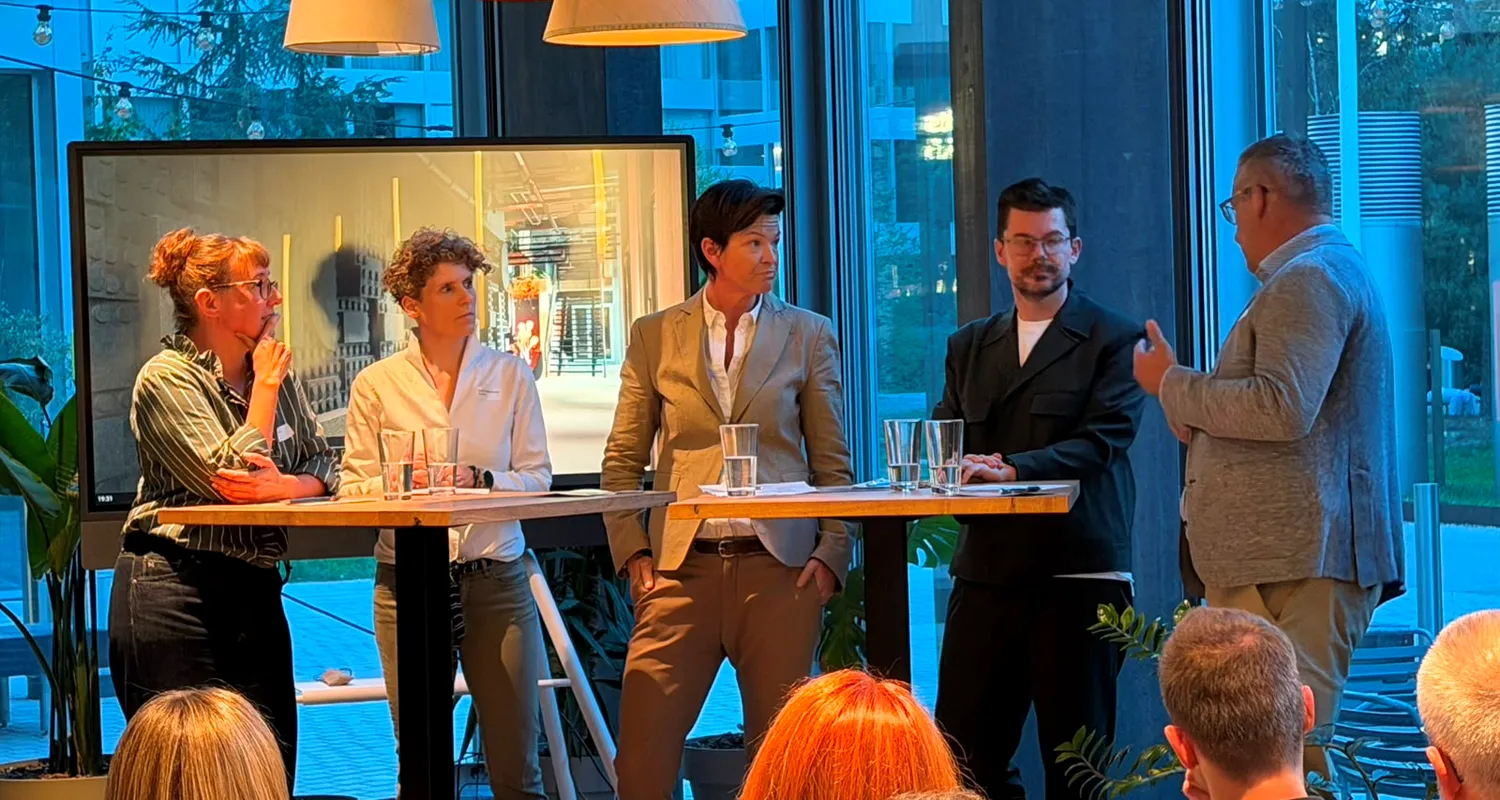
In their keynote, Dr. Arndt Pechstein and Dr. Martin Schwemmle of The Future Company explained why Human Intelligence is becoming a critical factor in how C-level executives and boards navigate the future. The panel discussion that followed explored what this means in practice.
Responsibility starts at the top
For Colette Schilling, Chair of the Board and former CEO of F. Hunziker + Co AG, Future Readiness starts at board level. If it is not understood and embraced there, it is unlikely to have an impact across the organization. Only when board members engage with the topic themselves can they fully understand what it means for the company as a whole.
Preparing for the future takes time. Nadja Nabholz, who serves on the boards of several companies, argued that Future Readiness deserves significantly more attention in board meetings. The key question is not whether or how to adopt a new technology, but whether an organization is willing to continually rethink its business. Many family-owned companies remain profitable but have not grown for some time. Her advice is to be bolder and more open to fresh perspectives from outside the organization. One guest, the CEO of an Anglo-Saxon company, saw this lack of courage as a broader European pattern, noting that risk-taking, decisiveness, and a culture that allows for mistakes are less developed in Europe.
Why good intentions lose momentum
There is rarely a shortage of initiatives. Many companies have gone through training programs and assessments, yet often little lasting impact remains, observed Colette Schilling. She also stressed the importance of bringing together different perspectives, not only those of the board and executive team, but also those of different departments, locations, middle management, and frontline employees. Simply asking at board level whether a company is future-ready can already spark valuable discussion.
Arndt Pechstein added that organizations need a tool that creates the necessary space and shifts the perspective from looking back to looking ahead. What conclusions would a leadership team reach if it had the opportunity to redesign the company from the ground up?
This question also resonated with many of the guests. Several planned to raise it at their next board or executive team meeting and see what kind of discussion it sparks.
Looking ahead also matters when filling key positions
A focus on the past also shapes how companies fill key leadership positions. Eveline Muhmenthaler sees this frequently in executive search. Viavanta is often brought in only once a challenge has already become urgent, while the selection process tends to focus primarily on what candidates have achieved in the past. But that does not provide the full picture.
That is why Viavanta works with four to five future scenarios, exploring how candidates would respond in specific situations they may face in the role. Colette Schilling added the client perspective: companies often rely heavily on the existing job description. Yet by the time a new leader takes up the position, six months may already have passed. This makes it essential to think ahead.
What is worth measuring
Asked which Future Skills they would most like to measure, Nadja Nabholz pointed to the courage to embrace the future, while Colette Schilling highlighted the ability to harness collective intelligence effectively. Arndt Pechstein sees the greatest potential in what he calls “fog competence.” Eveline Muhmenthaler described this as the ability to provide direction even when the path ahead is not yet clear.
As a second key capability, she highlighted a growth mindset: the willingness to keep learning and developing. At its core, Future Readiness is about people being able to think and act entrepreneurially, even in the face of uncertainty.
From idea to measurement tool
At Viavanta, we have been exploring how Future Readiness can be measured for the past year and a half. Together with The Future Company, we are developing a tool designed to make Future Readiness within companies, executive teams, and boards visible, comparable, and therefore more manageable. It is designed for senior leadership and brings together the perspectives of the board and executive team.
Over the coming weeks, we will test the tool internally, followed by a pilot phase with selected organizations towards the end of the year. We will share the first insights at the Future Leadership Events on March 31 and April 1, 2027. This will provide an initial indication of which factors truly reveal how future-ready an organization is.